How to Manage Stress Through Daily Rituals That Actually Work
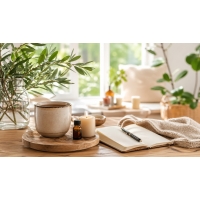
Small intentional habits that support calm, clarity, and emotional balance in modern everyday life
Stress has become a defining feature of modern life. Constant notifications, packed schedules, emotional overload, and the pressure to stay productive can leave even the most resilient people feeling mentally exhausted. Yet stress itself is not inherently negative—it is simply the body’s response to pressure and stimulation. The challenge begins when stress stops being temporary and becomes a permanent background state.
The good news is that emotional balance is rarely restored through dramatic life changes. More often, it is shaped by small, repeated rituals that help the mind and body recalibrate. Sustainable wellbeing is built through consistency, not intensity. Here are seven everyday habits that can help create more calm, focus, and resilience in your routine.
Why Stress Management Starts With Rituals, Not Motivation
When people feel overwhelmed, they often search for large-scale solutions: a holiday, a detox, a productivity system, a complete life reset. In reality, behavioural science suggests that emotional regulation is more strongly influenced by repeated daily patterns than occasional major interventions.
Rituals work because they reduce decision fatigue and create predictability. In an overstimulating world, predictability feels calming.
Small routines can help:
create structure during emotionally chaotic periods
reduce cognitive overload
support a greater sense of control
improve consistency in self-care behaviours
The most effective routines are not elaborate. They are simple enough to repeat even on difficult days.
Breath and Movement: The Fastest Way to Reset Your State
Physical tension and mental stress are deeply connected. One of the fastest ways to shift your internal state is through deliberate breathing and gentle movement.
Slow breathing patterns help create a sense of calm, while movement releases accumulated nervous energy and improves mental clarity. This is why many high performers—from athletes to executives—build movement into their stress-management routines.
Try incorporating:
five minutes of slow breathing before work
a brisk walk between meetings
light stretching after long periods of sitting
The goal is not athletic performance. It is helping the body transition out of constant alertness and back into balance.
The Hidden Power of Sleep Hygiene and Evening Rituals
Many people underestimate how strongly sleep quality influences mood, patience, concentration, and resilience. Even a few nights of inconsistent rest can make everyday challenges feel significantly heavier.
Creating an intentional evening routine can improve the transition from stimulation to rest. The body responds well to cues and repetition.
Helpful evening rituals include:
dimming lights one hour before bed
avoiding endless scrolling late at night
keeping the bedroom cool and quiet
following a consistent sleep and wake schedule
A refined evening routine is one of the most underrated forms of self-care. Rest is not a luxury—it is part of maintaining emotional equilibrium.
Mental Decluttering Creates Space for Calm
Modern stress is often psychological rather than physical. Many people are not overwhelmed by danger, but by unfinished thoughts, excessive information, and constant mental noise.
Writing thoughts down—whether through journaling, note-taking, or simple brain-dumping—helps externalise mental clutter. It creates distance between you and the thoughts circulating in your head.
Mental decluttering practices may include:
journaling for ten minutes in the evening
writing tomorrow’s priorities before bed
keeping a notebook for intrusive or repetitive thoughts
reflecting on what went well during the day
Clarity often begins when thoughts leave the mind and move onto paper.
Protecting Your Attention Is Essential for Emotional Wellbeing
Attention is one of the most valuable resources in modern life. Yet it is constantly fragmented by alerts, news cycles, social feeds, and digital noise. Many people feel stressed not because their lives are objectively unmanageable, but because their attention is continuously interrupted.
Intentional information boundaries can dramatically improve daily calm.
Consider:
checking news only at designated times
disabling non-essential notifications
keeping phone-free morning or evening windows
limiting social media during high-focus periods
Curating your information environment is a form of self-respect. Not everything deserves immediate access to your mind.
Emotional Resilience Is Built Through Connection and Presence
Humans regulate emotionally through connection. Genuine conversation, laughter, shared presence, and emotional support all contribute to a greater sense of groundedness and perspective.
In periods of stress, many people withdraw socially—yet this is often when connection matters most.
Meaningful connection does not require large social events. It can be as simple as:
a thoughtful conversation over coffee
a walk with a friend
calling someone you trust
spending uninterrupted time with family
Wellbeing is not built in isolation. A supported life often feels lighter than a solitary one.
* * *
Managing stress is rarely about eliminating every source of pressure from life. Ambition, responsibility, deadlines, and challenges will always exist. The real skill lies in building habits that help you remain steady within that reality.
Calm is not something people stumble into by chance—it is cultivated through repeated choices. Through better sleep, intentional movement, mindful boundaries, emotional connection, and small restorative rituals, daily life begins to feel less reactive and more deliberate.
You do not need to transform everything overnight. Start with one ritual that feels realistic now. A five-minute walk. An earlier bedtime. A phone-free morning. A quiet cup of tea without multitasking.
Over time, these seemingly small decisions shape not only your routine, but the way you experience your life. True wellbeing is often built in the quiet moments—through the habits that remind you to return to yourself, again and again.
Latest news
View all news 29/04/2026
How to Manage Stress Through Daily Rituals That Ac ...
Discover practical daily rituals that support emotional balance, reduce overwhelm, and help create a...
Read more 04/04/2026
Plants That Add Comfort and Style
Discover indoor plants that enhance your home interior and create a more balanced, stylish, and visu...
Read more 25/02/2026
The Capsule Beauty Bag: Essentials for Effortless ...
Discover how to build a capsule beauty routine with versatile, everyday makeup essentials. Learn bea...
Read more 25/02/2026
Aroma as Part of Personal Style: How to Choose You ...
Explore how to choose a signature scent that reflects your personal style, mood, and season. Practic...
Read more 24/02/2026
Skinimalism: Why Less Is the New Luxury in Skincar ...
Discover how skinimalism redefines beauty in 2026. Learn how minimalist skincare, capsule routines, ...
Read more 16/02/2026
Seasonal Skin Transition: Preparing Your Beauty Sh ...
As the snow begins to melt from the Alpine peaks and the first edelweiss sprouts through the thawing...
Read more 14/02/2026
Men’s Grooming: The Rise of Minimalist Swiss Skinc ...
The era when "men’s grooming" was limited to a simple bar of soap and a splash of aftershave is offi...
Read more 08/02/2026
Sensitive Skin Solutions: Why Swiss Formulations O ...
In an era of environmental stressors, fluctuating climates, and the fast pace of urban life, "sensit...
Read more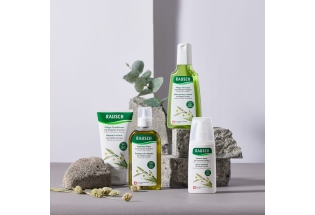 02/02/2026
The Science of Scalp Health: Why Rausch is the Pio ...
For over a century, the secret to beautiful, flowing hair has been rooted not just in the strands we...
Read more 25/01/2026
Lubex: From Dermatological Excellence to Daily Ant ...
When it comes to high-performance skincare, the line between medical dermatology and luxury beauty o...
Read more Fast delivery
 Buyer protection
 Data privacy
 14-day return policy
 Secure payment with SSL encryption